TPRM framework and best practices
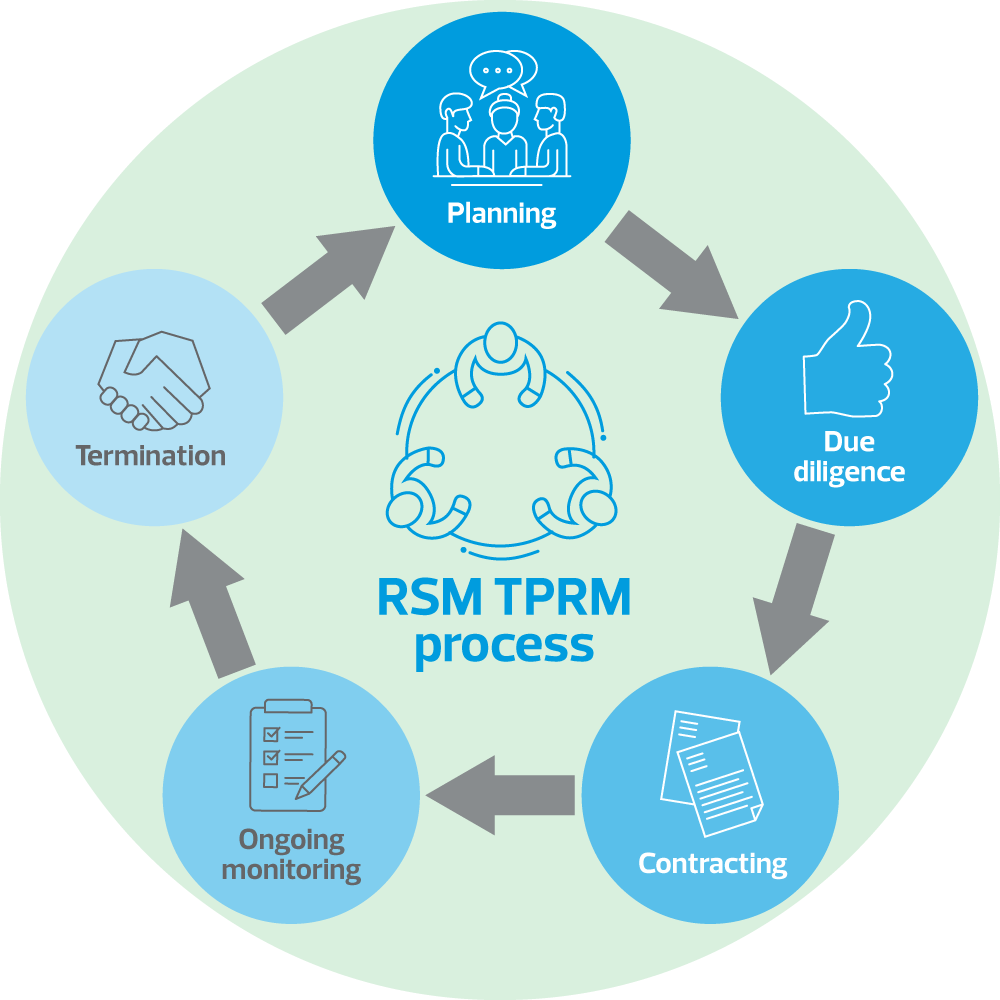
An effective TPRM program combines structured governance with practical execution to manage risk across the full vendor lifecycle. Key elements include:
1. Governance and ownership
Define clear ownership across business, risk and procurement teams, detailing accountable stakeholders for active management of third-party risks. Maintain a centralized inventory of vendors and establish consistent processes for identifying and categorizing risk based on data sensitivity, system access, artificial intelligence usage and regulatory impact.
2. Risk-based due diligence and assessment
Conduct risk-based due diligence prior to onboarding, evaluating cybersecurity, AI, compliance, and financial and operational controls. Tailor the depth of assessments based on inherent and residual risk to prioritize high-impact relationships.
3. Contractual controls and accountability
Establish contracts that define security requirements, audit rights, service-level agreements and incident notification obligations to formalize expectations and reduce exposure.
4. Technology-enabled scalability
Leverage technology to automate vendor inventories, assessments, workflows and reporting. This improves efficiency and allows programs to scale as vendor ecosystems grow.
5. Continuous monitoring and risk response
Continuously monitor third-party risk posture to identify emerging threats such as cyber incidents, control failures or financial instability, enabling proactive response and mitigation.
6. Offboarding and lifecycle closure
Implement formal offboarding processes to revoke system access, recover or destroy data, and fulfill all contractual obligations at the end of vendor relationships.