Agentforce Revenue Management reduces administrative work and speeds quote cycles for sellers.

Key takeaways


The system unifies CPQ and billing to streamline quote-to-cash workflows.

Integrating the sales and finance functions improves efficiency and visibility.
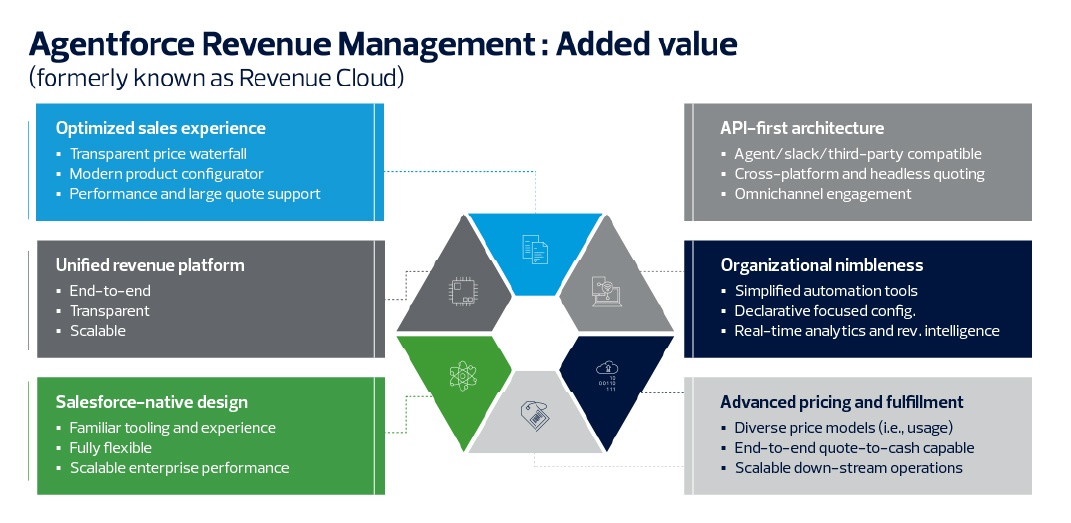
Salesforce’s Agentforce Revenue Management (formerly known as Revenue Cloud) transforms configuration, pricing, quote (CPQ) and billing solutions by providing a unified approach that boosts operational efficiency. The platform strives to provide a smooth customer experience throughout the quote-to-cash process. Agentforce Revenue Management (ARM) merges sales and finance processes, often delivering significant business results with its API-first, agent-ready and Salesforce-native architecture. ARM offers a strong and adaptable system for managing every stage of the revenue process with clarity and efficiency.
The benefits of usage-based pricing strategies
Many companies are moving from traditional subscription-based models to usage-based pricing strategies. This shift allows businesses to offer more flexible, customer-focused pricing that matches costs with actual use. Usage-based pricing enables sales teams to quote, sell and manage products based on real-time usage, customizing their approach to meet customer needs. Usage-based pricing models can be implemented through core usage-based pricing, subscription-based usage rates and flexible token-based usage. This model adjusts to market trends, providing a competitive edge by meeting the unique demands of different industries like technology, manufacturing and life sciences.
Streamlining the workflow
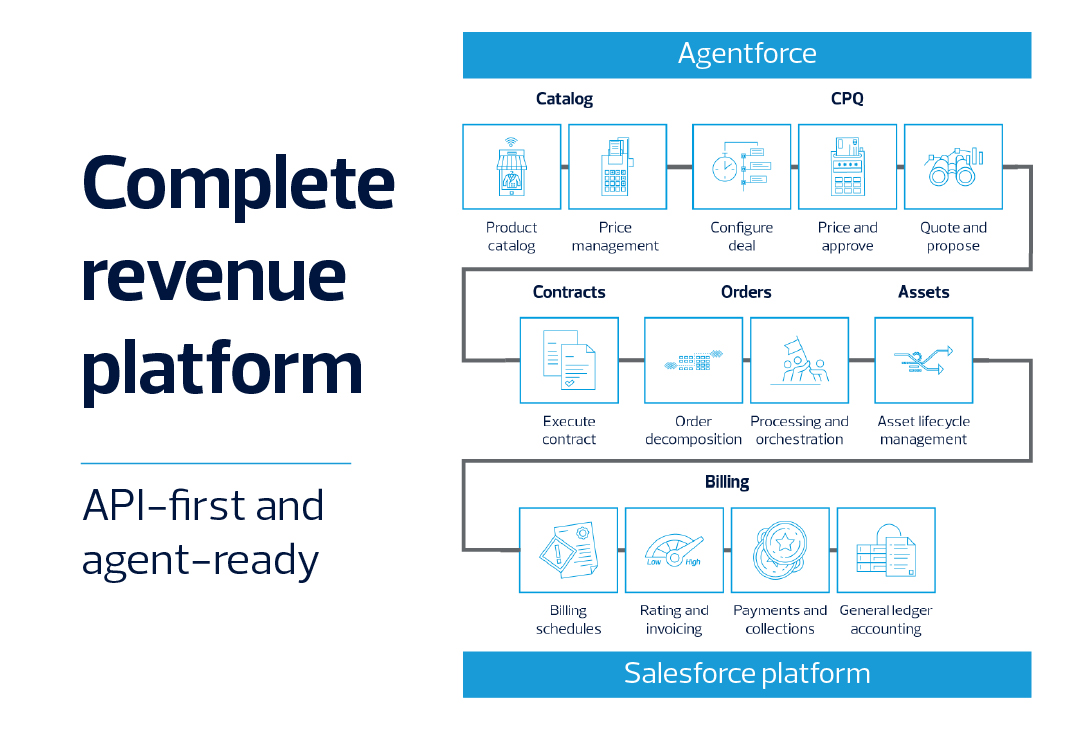
ARM simplifies and enhances the seller workflow by tackling inefficiencies, extended deal cycles and lack of visibility due to separate systems. It integrates product catalog management, contract lifecycle management, order management and billing.
4969550_ig_salesforce_article_optimizing_seller_workflow_agentforce_revenue_management_2
The platform supports various pricing strategies, including volume-, account-, usage- and consumption-based pricing, and promotional discounts. Its advanced-quoting features and guided selling and user experience customization options enable sales users to create and manage quotes. Advanced approval workflows and document generation tools make the quoting process more straightforward and efficient.
ARM allows use across multiple channels, such as third-party sites, apps and experience cloud portals. This flexibility extends quoting and billing abilities beyond traditional systems, integrating with enterprise resource planning and other planning systems. Simplified setup for product rules and complex processes, like provisioning and order decomposition, further enhances its interoperability.
Switching from legacy CPQ tools to ARM offers reduced administrative work, quicker quote cycles and reliable APIs. Its advanced contract management and subscription-based pricing and billing features are optimal for businesses expanding into the enterprise market. Organizations that are considering migration should assess budget, change management and product enhancement needs.
The takeaway
The shift toward usage-based pricing and the integration of dynamic revenue orchestration offer businesses a strategic advantage. ARM can boost operational efficiency, enhance customer experience and deliver measurable business results.
Adopting this innovative system helps organizations stay ahead of the curve while meeting the ever-changing needs of their customers.
RSM contributors
-
 Keegan TagueManager
Related insights